

 by
How to Speed Up Muscle Strain Recovery: Why Smart Movement Beats Bed Rest
Complete rest often slows muscle strain recovery rather than helping it. Relative rest combined with gentle, controlled movement tends to support healing more effectively than immobility. If symptoms are sharp, worsening, or not settling within a few days, a physiotherapy assessment can help clarify the safest path forward.
After a muscle strain, the instinct is straightforward: stop moving, protect the area, and wait it out. That instinct makes sense. Pain signals caution, and pushing through something that hurts feels risky. So you rest. You skip the run, take the elevator, and sit more carefully than usual.
The problem is that prolonged rest often works against you. For many strains, movement is part of the solution, not the threat. The key is knowing what kind of movement, how much, and when to progress it.
This post breaks down what muscle strain recovery actually involves, why immobility creates its own set of setbacks, and how to build a smarter approach to getting back to running, pickleball, the gym, or simply moving through your day without hesitation.
Should You Rest or Move a Muscle Strain?
This is one of the most common questions people face after a strain, and the short answer is: most of the time, you need both, in the right sequence.
People default to complete rest for understandable reasons. Movement hurts, there is fear of making things worse, and without clear information, stopping entirely feels like the safe choice. The problem is that “rest” gets interpreted as “do nothing,” which is rarely what recovery needs.
There is a useful distinction between relative rest and complete immobility. Relative rest means avoiding the specific movements and loads that clearly aggravate symptoms, while keeping the body gently active in ways it tolerates. Complete immobility removes circulation, reduces joint range of motion, and tells the nervous system that the area is off-limits, all of which slow the process.
Clinical guidance on muscle strain management supports early controlled activity over extended bed rest for most presentations. The focus in early recovery is calm, guided movement rather than pushing through pain.
Muscle strain treatment and rehab works best when it is matched to where you actually are in recovery, not where you hope to be in a week.
Why Complete Immobility Can Slow Your Comeback
When a strained muscle is held still for too long, several things tend to happen, and none of them help you return to activity faster.
Stiffness builds in the surrounding tissue. Strength in the affected muscle drops, sometimes quickly. The area becomes more sensitive to movement rather than less. And perhaps most importantly, confidence in using that part of your body erodes.
You start walking differently to protect it. You hesitate on stairs. You skip workouts and then feel deconditoned on top of injured. When you eventually try to return to sport or training, the muscle has had less preparation than it needed, which raises the risk of re-injury.
Research on staged muscle injury rehabilitation describes how recovery is structured across distinct phases, each requiring different types of loading and movement. Sitting out the early phases entirely disrupts that progression.
Pain is useful information, not always a stop sign. Sharp or severe symptoms, significant bruising, swelling, or weakness are signals to get assessed rather than push through. But mild discomfort that settles quickly with gentle movement is often a normal part of healing, not a reason to stop entirely.
The First Few Days: Protect Without Shutting Down
In the first 48 to 72 hours after a strain, the priority is reducing irritation while keeping nearby areas moving. That means two things at once: avoiding what provoked the strain, and not abandoning movement altogether.
Some practical approaches for the early phase include short, gentle bouts of pain-free movement, keeping joints above and below the strained area mobile where tolerated, and using position changes or light walking if the area allows it.
A simple traffic light approach helps guide decisions:
| Signal | What It Looks Like | What to Do |
| Green | Mild discomfort that settles quickly after movement | Continue at that level, progress gradually |
| Yellow | Symptoms increase during movement and linger afterward | Reduce intensity or load, reassess |
| Red | Sharp pain, swelling, bruising, significant weakness, or loss of function | Stop and seek assessment promptly |
If you are unable to bear weight, notice major bruising or swelling, or suspect something more than a mild strain, getting assessed quickly matters. These presentations go beyond self-guided management.
How to Heal a Pulled Muscle Faster With Strategic Movement
Faster recovery does not come from doing more. It comes from doing the right things at the right time.
A well-structured approach to exercises for muscle strain recovery typically moves through stages rather than jumping straight to intense rehabilitation. Physiotherapy frameworks for muscle strain describe progression from protecting and settling the area, to restoring range of motion, to rebuilding strength, and finally to activity-specific training.
In practice, that progression often looks like this:
- Gentle range of motion work to reduce stiffness without aggravating the strain
- Light muscle activation to maintain neural connection and prevent significant strength loss
- Gradual load through strengthening exercises as the tissue tolerates it
- Controlled stretching once the muscle is stable enough to benefit from it
- Balance, coordination, and activity-specific drills closer to return to sport or full function
What that looks like depends on who you are and what you are returning to:
- A runner might start with walking intervals before attempting any running, then progress to jog-walk combinations before full runs.
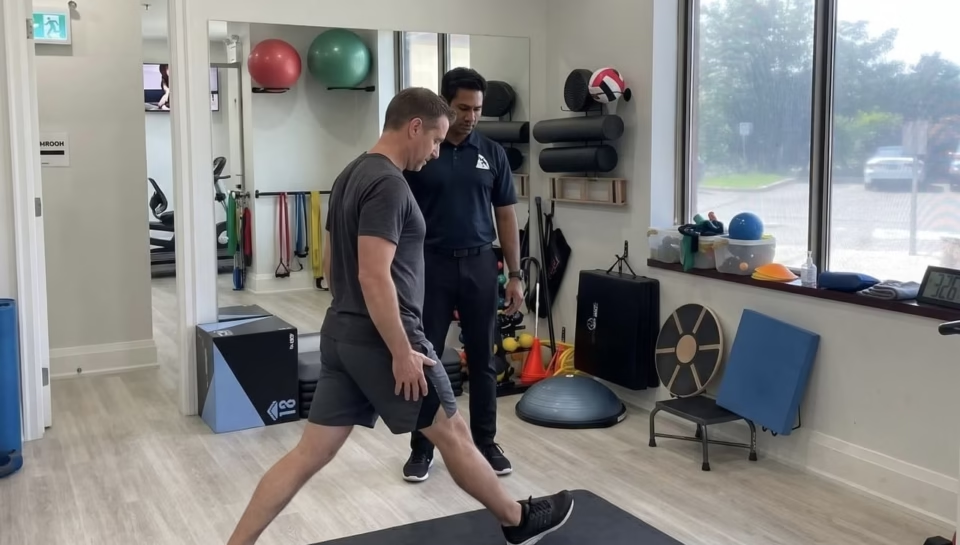
- A pickleball player might work through controlled side steps and direction changes before returning to quick lateral lunges and court movement.
- Someone working from home with a back or hip strain might use frequent gentle movement breaks throughout the day rather than staying seated for long stretches that stiffen the area further.
The right starting point for your recovery depends on the severity of the strain, the specific muscle involved, your current symptoms, and what you are working toward. For more detail on how physiotherapy addresses these injuries, the arm muscle strain service page outlines how individualized assessment shapes the treatment approach.
What Does Muscle Strain Recovery Time Really Depend On?
Recovery timelines vary considerably, and the calendar alone is not a reliable guide to whether you are ready to return to activity.
Several factors shape how long recovery takes:
- The degree of the strain (mild, moderate, or more significant tissue involvement)
- Which muscle or muscle group is affected and how much it is used in daily activity
- Previous injuries to the same area
- Sleep quality, nutrition, and general stress load, which all influence tissue repair
- Whether the rehabilitation is progressed steadily or rushed too quickly
Rather than tracking days, tracking function gives a clearer picture. Ask yourself: Are you walking more normally? Are you moving through a wider range without symptoms spiking? Are you recovering faster after activity than you were last week? Is strength returning?
Those functional improvements tell you more about readiness than a date on the calendar. Recovery timelines are individual, and an assessment gives you a much clearer picture of where you are and what comes next.
When Physiotherapy Helps You Move Forward With Confidence
Physiotherapy is not reserved for severe injuries or people who cannot walk. It is for anyone who is unsure what to do next and wants a clear plan instead of guesswork.
A physiotherapist assesses the strain, rules out presentations that need further attention, and identifies which movements are appropriate at each stage of recovery. From there, the work involves building a step-by-step rehab plan that progresses from where you are now to where you want to be, whether that is returning to work, resuming training, or getting back on the pickleball court.
Working with a physiotherapist also reduces the risk of doing too much too soon, which is one of the most common reasons people re-strain the same muscle. You stay actively involved in your own recovery. The plan is yours. The guidance helps you execute it with confidence rather than caution.
At BeActive Physio, we support active people across Oakville who want to get back to the activities that matter most, with a clear understanding of what to protect, what to move, and how to rebuild from there.
Key Takeaways
- Relative rest, meaning avoiding aggravating movements while staying gently active, supports recovery better than complete immobility for most muscle strains.
- Prolonged immobility leads to stiffness, strength loss, and reduced movement confidence, all of which extend recovery time.
- A traffic light approach (green for mild settling discomfort, yellow for lingering symptoms, red for sharp pain or swelling) helps guide early movement decisions.
- Structured rehab for muscle strains typically progresses through range of motion, activation, strengthening, and activity-specific stages rather than jumping straight to intense exercise.
- Recovery timelines vary based on strain severity, muscle location, previous injury history, and overall health habits. Functional improvements are a more reliable marker than days elapsed.
- Physiotherapy assessment clarifies which movements are safe now, builds a personalized progression plan, and reduces the risk of re-injury from returning to activity too quickly.
Get Clear on Your Next Move
If a muscle strain is keeping you away from running, pickleball, the gym, or simply moving through your day comfortably, you do not have to choose between doing nothing and pushing through on your own.
At BeActive Physio, we offer one-on-one physiotherapy assessments to help you understand exactly what your strain involves, which movements are appropriate right now, and how to rebuild strength safely from there. Care recommendations are based on your assessment findings, current symptoms, and personal goals.
Book your assessment with our team and take the first step toward returning to the activities that matter most to you.
FAQ
Should you rest or move a muscle strain?
For most strains, the approach that supports recovery is relative rest combined with gentle, controlled movement rather than complete immobility. Avoid the specific movements that sharply increase symptoms, but do not assume staying still is always safer. If pain is sharp, severe, or not settling within a few days, getting assessed helps clarify what is safe to do.
What exercises help with muscle strain recovery?
Early exercises typically focus on gentle range of motion and light muscle activation to reduce stiffness and maintain strength. As the tissue stabilizes, rehab progresses to gradual strengthening, stretching where appropriate, and eventually balance or activity-specific drills. The right exercises depend on which muscle is strained, the degree of injury, and your activity goals.
How do I know if I am doing too much too soon?
Signs that you are overloading the area include pain that increases during activity rather than settling, symptoms that linger or worsen after movement, swelling, altered gait, or noticeable strength reduction. A physiotherapist can review your current activity level and adjust the plan so that movement is supporting your recovery rather than setting it back.