
 by
by 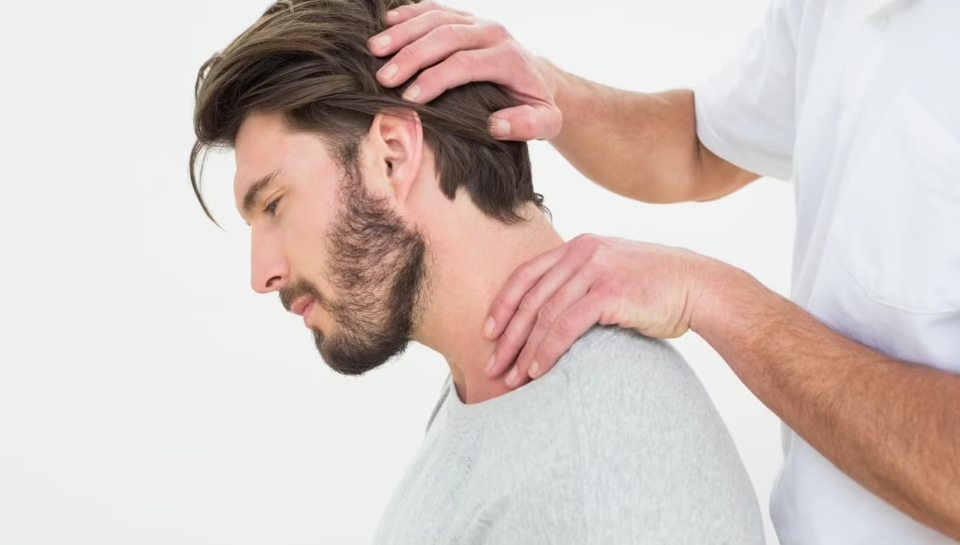
What Are the Different Types of Physiotherapy Treatments Available?
TLDR
Physiotherapy is not a single treatment. It draws from manual therapy, exercise therapy, electrotherapy and other modalities, functional rehabilitation exercises, and orthotics, each chosen based on your assessment, your condition, and what you want to get back to doing. A physiotherapist builds a plan that combines these tools in the right order and proportion for your specific recovery goals.
Most people walk into their first physiotherapy appointment expecting a set of stretches, maybe some massage, and a printout of exercises to do at home. That picture is understandable, but it leaves out a lot of what physiotherapy actually involves.
The range of treatments a physiotherapist works with is broader than most patients realize. Depending on what your body needs and what you want to return to, a session or a course of care might include hands-on joint work, carefully designed strengthening progressions, technology-supported modalities, movement training that mirrors your sport or workday, and, in some cases, orthotics to address how load moves through your feet and legs.
This post walks through the main categories of physiotherapy treatment, explains what each one involves, and connects them to the kinds of goals that matter most to active adults in Oakville, whether that means getting back on the running trail, finishing a pickleball season, working through the day without discomfort, or lifting and moving without setbacks.
Is Physiotherapy One Treatment or a Personalized Plan?
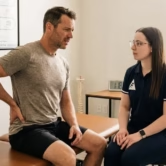
Physiotherapy is a plan, not a single treatment. Before any hands-on work or exercise begins, a physiotherapist assesses how you move, where you feel limited or guarded, what your strength and mobility look like, and what your daily and athletic demands actually are.
Two people with knee pain that feels identical to them may need completely different approaches depending on how the knee is moving, what the surrounding tissue is doing, what sport or activity they are working toward, and how their body has been compensating. Assessment drives the plan.
Here is a quick reference summary for what a physiotherapy plan might include:
| Treatment Category | What It Involves | When It Tends to Be Used |
| Manual therapy | Hands-on joint and soft tissue techniques | Stiffness, restricted mobility, guarding |
| Exercise therapy | Targeted movement for strength, mobility, coordination | Building capacity, restoring function |
| Electrotherapy and modalities | Electrical stimulation, heat, cold, ultrasound, taping | Pain tolerance, early-stage recovery support |
| Functional rehabilitation | Sport and life-specific movement training | Closing the gap between clinic and real-world activity |
| Orthotics | Shoe inserts that influence foot position and load | Recurring lower limb symptoms, gait-related concerns |
| Education and activity modification | Guidance on movement habits, load, and self-management | Throughout every stage of care |
No single treatment category delivers a guaranteed outcome on its own. Progress comes from matching the right tools to the right person at the right stage of recovery. According to a review available through the NIH Bookshelf on manual therapy and exercise, combining hands-on care with active exercise tends to produce meaningful results for many musculoskeletal conditions, which reflects why physiotherapy plans typically include both.
When You Feel Stiff or Guarded: How Does Manual Therapy Help?
Manual therapy in physiotherapy refers to hands-on techniques a physiotherapist uses to address stiffness, restricted joint movement, or muscle guarding. This includes joint mobilization, soft tissue work, assisted stretching, and movement guidance applied directly through contact with the body.
The goal is not to replace active rehab. Manual therapy often works best as a way to open up movement so that exercise and strength work become more accessible. When a joint or muscle group is guarded or restricted, adding load before addressing the restriction often leads to compensation patterns rather than progress.
For active adults in Oakville, manual therapy often comes up in situations like these:
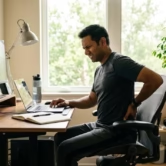
- Neck and upper back stiffness from extended desk work or poor monitor positioning
- Shoulder restriction that limits overhead lifting or racquet swing mechanics
- Hip and ankle mobility limitations that affect running economy or court movement
- Thoracic tightness that reduces rotation in sport or comfortable sitting
Hands-on care is always based on assessment, delivered with clear explanation, and guided by your comfort and consent throughout.
When You Need to Rebuild: What Does Exercise Therapy Actually Do?
Physiotherapy exercise therapy is targeted movement prescribed for a specific purpose, whether that is restoring mobility, building strength, improving balance, coordinating muscle activation, or preparing your body for return to sport or work.
The difference between a physiotherapy exercise program and a general workout is precision. Each movement is chosen for a reason, matched to where you are in recovery, and progressed over time as your capacity builds. The focus is on movement quality and understanding what your body is ready for, not simply adding load or repetitions.
What This Looks Like for Different Goals
- Runners: Glute strengthening, calf loading progressions, single-leg stability, and cadence awareness drills
- Pickleball and racquet sport players: Shoulder rotator cuff control, lateral hip stability, wrist and elbow conditioning
- Weekend warriors: Hip hinging patterns, knee loading tolerance, single-leg strength under fatigue
- Work-from-home adults: Spinal mobility, postural endurance, thoracic rotation, and desk-break movement routines
The right exercise program also gives you clear direction between visits. You leave each session knowing what to do, why you are doing it, and what to pay attention to. That clarity is part of the care, not an afterthought.
When Pain Gets in the Way of Progress: How Do Modalities Support Recovery?
Modalities are tools used alongside active treatment, not in place of it. They are not the plan itself, but they can support your ability to engage with the plan more comfortably and effectively.
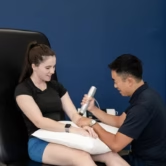
Electrotherapy in physiotherapy refers to the use of electrical stimulation, which in some cases may be applied to support pain modulation, assist with muscle activation, or improve tolerance for movement during early recovery. As noted by Physiopedia’s overview of therapeutic modalities, these tools serve a range of potential supportive functions within a broader rehabilitation approach.
Other common modalities a physiotherapist might use include:
- Therapeutic ultrasound applied to soft tissue
- Heat to support tissue extensibility before movement work
- Cold to manage post-activity irritation
- Taping techniques to provide feedback, offload tissue, or support joint position
If you have ever wondered why a physiotherapy session sometimes includes passive tools when the goal is active recovery, the answer is context. Some people need a reduction in irritation or guarding before they can engage fully with strengthening or mobility work. Modalities address that window. Long-term progress, though, comes from restoring the movement and strength your body needs to function. Suitability for any modality depends on your condition, health history, and what your assessment shows.
When You Are Almost There: What Is Functional Rehabilitation?
Functional rehabilitation exercises bridge the gap between feeling better in a clinic and feeling ready for real life. Being comfortable during a controlled assessment is different from being confident sprinting to a ball, lifting a heavy bag, carrying groceries up stairs, or sitting through a full workday without bracing.
Functional rehab takes the strength and mobility you have built and tests it in movements that match your actual demands. The progressions tend to follow a clear sequence:
- Controlled movement with attention to form and loading
- Adding external load or resistance
- Adding speed, reaction, or direction change
- Replicating the specific demands of your sport, work, or activity
For runners, this might mean step-down progressions, single-leg hopping, and return-to-run interval work. For pickleball players, it includes lateral shuffle drills, quick direction changes, and overhead reach under fatigue. For someone returning to recreational sport after a long break, it means progressive loading with real context rather than isolated exercises alone.
Research published through NIH PubMed Central on functional rehabilitation and orthotic intervention highlights how function-focused rehabilitation approaches, including those that account for lower limb mechanics, contribute to meaningful recovery outcomes. Confidence in what your body is ready to do is a real part of recovery, and functional rehab is where that confidence builds.
When Foot Mechanics Are Part of the Problem: Where Do Orthotics Fit In?
Orthotics in physiotherapy are shoe inserts or supportive devices that influence how your foot sits, how load distributes across your lower limb, and how movement mechanics respond through your ankle, knee, and hip.
Orthotics are not automatically part of every physiotherapy plan. They are one tool, and they are most relevant when foot position or load distribution appears to be contributing to a symptom pattern. A physiotherapist considering orthotics will also look at your footwear, your gait, your hip and ankle strength, and whether exercise and movement changes are sufficient on their own.
Orthotics tend to come up in discussions around:
- Recurring foot or ankle pain that returns despite strengthening
- Knee or hip symptoms linked to how load moves through the lower limb
- Running-related tissue load concerns
- Prolonged standing or walking discomfort related to foot position
The clearest way to understand how orthotics fit in is this: exercises build the capacity your body needs to control movement. Orthotics, when appropriate, modify the mechanical environment your foot works within. Used together, they can support a more complete plan than either would on its own. But that decision starts with assessment, not assumption. Our physiotherapy assessments take your full movement picture into account before recommending any specific treatment approach.
Key Takeaways
- Physiotherapy draws from multiple treatment categories including manual therapy, exercise therapy, electrotherapy and other modalities, functional rehabilitation, and orthotics. A plan uses whichever combination fits your assessment and goals.
- Manual therapy addresses stiffness and restricted movement through hands-on techniques, and works best when paired with active strengthening and mobility work rather than used in isolation.
- Physiotherapy exercise therapy is distinct from a general workout because it is matched to your injury stage, focused on movement quality, and progressed with a specific return-to-activity goal in mind.
- Modalities like electrotherapy, heat, cold, and taping support comfort and early recovery, but do not replace the active work needed to restore strength and function.
- Functional rehabilitation prepares your body for real demands, not just clinic conditions. It builds confidence alongside physical capacity.
- Orthotics are appropriate in specific cases where foot mechanics and load distribution are contributing factors, and they are most effective when combined with strengthening and gait-related work.
Ready to Build a Plan Around Your Goals?
If you are not sure whether you need manual therapy, exercise progressions, electrotherapy, functional rehab, or orthotics, you do not have to sort that out before booking. That is exactly what an assessment is for.
At BeActive Physio in Oakville, we work one-on-one with each person to understand how you move, what your goals are, and what is getting between you and them. From there, we build a plan that gives you a clear picture of what to do, why it matters, and how to keep moving forward with strength and confidence.
Book an assessment and walk away with a plan that fits you, not a generic protocol.
Frequently Asked Questions
What are the different types of physiotherapy treatments available?
Physiotherapy treatments include manual therapy, exercise therapy, electrotherapy and other modalities, functional rehabilitation exercises, patient education, activity modification, and orthotics when clinically appropriate. Your plan will use one or several of these depending on your assessment findings and recovery goals.
Is physiotherapy mostly massage or exercises?
Physiotherapy is broader than either massage or exercises alone. A physiotherapist combines hands-on care, targeted strengthening, movement retraining, modalities, education, and functional rehab based on what your assessment shows and what activity you want to return to. The specific mix depends entirely on your situation.
Do I need orthotics if I have knee, hip, or foot pain?
Not necessarily. Orthotics are relevant in some cases, particularly when foot mechanics or lower limb load distribution appear to be contributing to your symptoms. A physiotherapy assessment helps determine whether orthotics, strengthening exercises, footwear changes, or a combination of approaches makes the most sense for your situation.