

 by
by 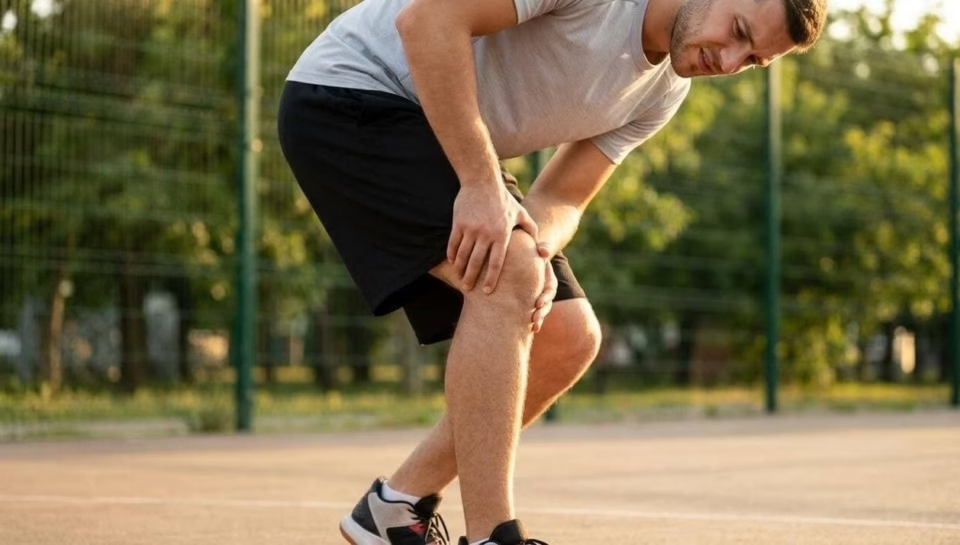
ACL Injuries in Young Athletes: Prevention and Rehab Without Pushing Through Pain
Early signs of an ACL injury, such as knee instability, swelling, or a pop sensation, deserve prompt assessment rather than a wait-and-see approach. Compensation patterns that develop when athletes push through symptoms often make recovery longer and more frustrating. Structured ACL rehabilitation and a gradual, criteria-based return to sport give athletes the strongest path back to the activities they care about.
The knee feels a little off after that awkward landing. There was maybe a pop, some swelling that came and went, and a nagging sense that something is not quite right. For many athletes, the instinct is to tape it up, finish the season, and figure it out later.
That instinct is understandable. Stepping back from sport feels like losing ground. But when early warning signs go unaddressed, the body adapts around the problem in ways that create new ones. Compensation sets in. Movement becomes effortful. Frustration follows.
This post walks through what early ACL symptoms look like, why the body’s protective adaptations can work against you, how ACL injury prevention for young athletes is built into training, what rehab focuses on, and how return to sport after ACL injury is approached with a clear progression rather than a guess.
When “Just Push Through It” Becomes a Knee Warning Sign
Athletes often minimize knee symptoms after a twist, sudden stop, or awkward landing because the initial pain can settle quickly, making it feel like nothing serious happened. That does not mean the joint is ready for sport.
The early signs of an ACL injury worth paying attention to include:
- A pop or snap sensation at the moment of injury
- Rapid swelling, often within the first few hours
- The knee giving way or feeling unstable during movement
- Difficulty with pivoting, cutting, or landing
- A loss of confidence trusting the knee under load
Not every knee injury is an ACL tear, and only a qualified healthcare provider can assess what is actually going on. These signs are a reason to get assessed, not a reason to push harder through training.
Safety note: Severe pain, significant swelling, inability to bear weight, visible deformity, or a locked knee should be assessed promptly by a qualified healthcare provider. Do not wait those out.
Why Compensation Slows the Comeback
When the knee feels unstable, the nervous system responds by protecting the joint. Athletes shift weight to the opposite leg, shorten their stride, avoid bending the knee fully, or offload through the hip and ankle instead. This is not weakness; it is the body doing its job.
The problem is that compensation patterns become habits. Movement that used to feel automatic starts requiring effort. Performance drops. Training feels off in ways that are hard to explain. And the frustration of not moving freely often builds before the athlete fully understands what is driving it.
This shows up differently depending on the person:
- Runners notice an uneven stride or hesitation going downhill
- Pickleball players start avoiding quick side steps or split-step landings
- Weekend athletes feel uncertain during direction changes or pivots
- Active adults who sit for long hours at home notice stiffness that turns into discomfort once they try to move at full intensity
Identifying and addressing these patterns early is one of the most practical reasons to seek an assessment rather than waiting until a competition forces the issue.
ACL Injury Prevention Starts Before the Big Moment
Prevention is about building movement quality and physical capacity, not avoiding sport. Research on ACL injury prevention points consistently to neuromuscular training programs that combine strength, balance, landing mechanics, and agility work as effective tools for reducing injury risk.
The habits that help most include:
- Building strength through the hips, glutes, hamstrings, and calves
- Training the knee to track over the toes during squats, jumps, and directional changes
- Practising controlled landings that absorb force gradually rather than with a stiff leg
- Developing single-leg balance and stability
- Managing training load increases gradually rather than spiking volume or intensity too quickly
Evidence-based guidelines for preventing ACL injuries in young athletes support the use of structured warm-up and neuromuscular training programs that address these movement patterns consistently over a season.
The right prevention exercises depend on the athlete’s sport, age, current strength, and movement habits. A runner preparing for a half marathon needs a different focus than a pickleball player building lateral control or a high school athlete returning after a growth spurt. Prevention is not one-size-fits-all.
What Does ACL Rehab Actually Work Toward?
ACL rehabilitation is not simply about strengthening the knee. It is about restoring the full movement system so the athlete can load, accelerate, decelerate, and react with confidence.
Key goals in rehabilitation include:
| Rehab Goal | What It Means in Practice |
| Restore range of motion | Regain comfortable knee bending and straightening without compensation |
| Reduce swelling and irritation | Allow the joint to tolerate progressive loading |
| Rebuild quad, hamstring, and glute strength | Create the muscular support the knee needs to function under sport demands |
| Improve balance and control | Train the nervous system to respond quickly and accurately |
| Re-train sport-specific movement | Practise landing, cutting, and deceleration in a controlled environment |
| Restore confidence in the knee | Build the psychological readiness to move freely without fear |
Whether rehab follows surgery or takes a non-surgical path depends on injury severity, the athlete’s goals, age, sport demands, and medical guidance. ACL rehabilitation for young athletes emphasizes that progression should be driven by what the athlete is ready for physically and functionally, not by a fixed calendar.
A physiotherapist working in sports rehabilitation helps identify where the gaps are now and what needs to develop before the next stage. That clarity removes a lot of the guesswork that makes recovery feel uncertain.
Timelines vary. Injury severity, treatment approach, sport demands, and how consistently the rehab program is followed all shape how the recovery unfolds. Many people notice meaningful improvements in strength and movement control well before they are ready for full competition, and those early wins matter.
The Hard Part: Staying Patient When Sport Is on Pause
Forced time away from sport is one of the more difficult parts of ACL recovery, and it deserves to be acknowledged directly. Missing games, feeling behind teammates, and losing your rhythm in a sport you have trained for creates real emotional weight.
The mental side of ACL rehab is well recognized. Athletes often navigate fear of re-injury, pressure to return before they feel ready, and a sense of disconnection from their sport identity while they are sidelined. These experiences are real, and they belong in the recovery conversation.
A few things that tend to help:
- Track strength and movement improvements, not just pain levels. Progress often shows up in capacity before it shows up in comfort.
- Ask your physiotherapist what you can do now, not just what you need to avoid. Staying active within safe limits keeps conditioning from slipping.
- Use rehab sessions to build confidence in the knee, not just complete a checklist of exercises.
- Return to sport is a goal worth working toward steadily rather than a date to race toward impatiently.
Returning too soon, before strength and movement control are genuinely restored, increases the risk of re-injury. That is not a reason to be fearful; it is a reason to be deliberate.
Return to Sport Is a Checklist, Not a Calendar
Return to sport after ACL injury should be based on function, not a fixed number of weeks. Time alone does not tell you whether the knee is ready for the demands of competition.
Key readiness areas include:
- Strength symmetry between the injured and uninjured leg
- Controlled performance in hop, landing, and agility tasks when appropriate to the stage of recovery
- No concerning swelling response after progressive activity
- Confidence with sport-specific movements under realistic conditions
- A gradual progression through practice before returning to full competition
For athletes in Oakville balancing school schedules, work demands, family commitments, and sport seasons, having a personalized plan that maps out these steps clearly makes the process far more manageable and far less uncertain.
The goal is not just to get back on the field. It is to get back with the strength, control, and confidence to stay there.
Key Takeaways
- Early signs of an ACL injury include a pop at the time of injury, rapid swelling, knee instability, and difficulty with pivoting or landing. Each of these warrants assessment.
- Compensation patterns develop when athletes train through knee symptoms. Identifying and addressing them early prevents those habits from becoming long-term movement problems.
- ACL injury prevention programs that include strength, balance, landing mechanics, and agility training have research support for reducing injury risk in young and active athletes.
- ACL rehabilitation addresses the full movement system, including strength, range of motion, neuromuscular control, and psychological readiness, not just the knee in isolation.
- Return to sport should follow a function-based progression, not a fixed timeline. Strength symmetry, movement control, and confidence all factor into readiness.
- The emotional side of ACL recovery, including fear of re-injury and frustration with time off, is a recognized part of the rehabilitation process and worth addressing directly.
Ready to Move Forward With a Clear Plan?
If your knee feels unstable, swollen, or not quite right after sport, waiting until compensation becomes your new normal is not the only option. The sooner you understand what is happening, the sooner you can start building toward what you want to get back to.
At BeActive Physio, we work with you one-on-one to assess what is going on, address the movement patterns that have developed, and build a plan that fits your sport, your schedule, and your goals. Whether you are a competitive young athlete, a weekend runner, a pickleball regular, or an active adult getting back to movement, we take a complete approach that includes your strength, your confidence, and your return to the activities that matter to you.
Book an assessment to get clarity on where you are now and what your next steps look like.
Physiotherapy recommendations are individualized. This blog is for general educational purposes and does not replace medical assessment or advice. If you are experiencing severe pain, significant swelling, inability to bear weight, or any urgent symptoms, please seek prompt care from a qualified healthcare provider.
Frequently Asked Questions
Can you walk with an ACL injury?
Some people walk after an ACL injury, particularly once the initial pain settles down. Walking ability does not confirm the knee is stable for running, pivoting, jumping, or returning to sport. If the knee gives way, swells after activity, or feels unreliable during movement, it should be assessed by a qualified healthcare provider.
What are effective ACL injury prevention exercises for young athletes?
Effective programs typically combine strength training for the hips, glutes, and hamstrings with balance work, controlled landing practice, agility drills, and single-leg stability exercises. The right approach depends on the athlete’s sport, current strength level, movement patterns, and training load. A physiotherapist can help design a program specific to those factors.
When can an athlete return to sport after an ACL injury?
Return to sport timing varies and should be guided by functional readiness rather than a fixed number of weeks. Strength symmetry between legs, movement control during sport-specific tasks, absence of concerning swelling after activity, and psychological confidence with the knee are all considered alongside medical or physiotherapy guidance before a full return to competition.